Your cart (0)
Biotin for Curly, Chemically Treated & Colored Hair: Does It Work Differently? – Complete Guide

Medically Reviewed by
Dr. Kalyani Deshmukh
Published Date: March 24, 2026
Updated: March 24 at 7:10 AM
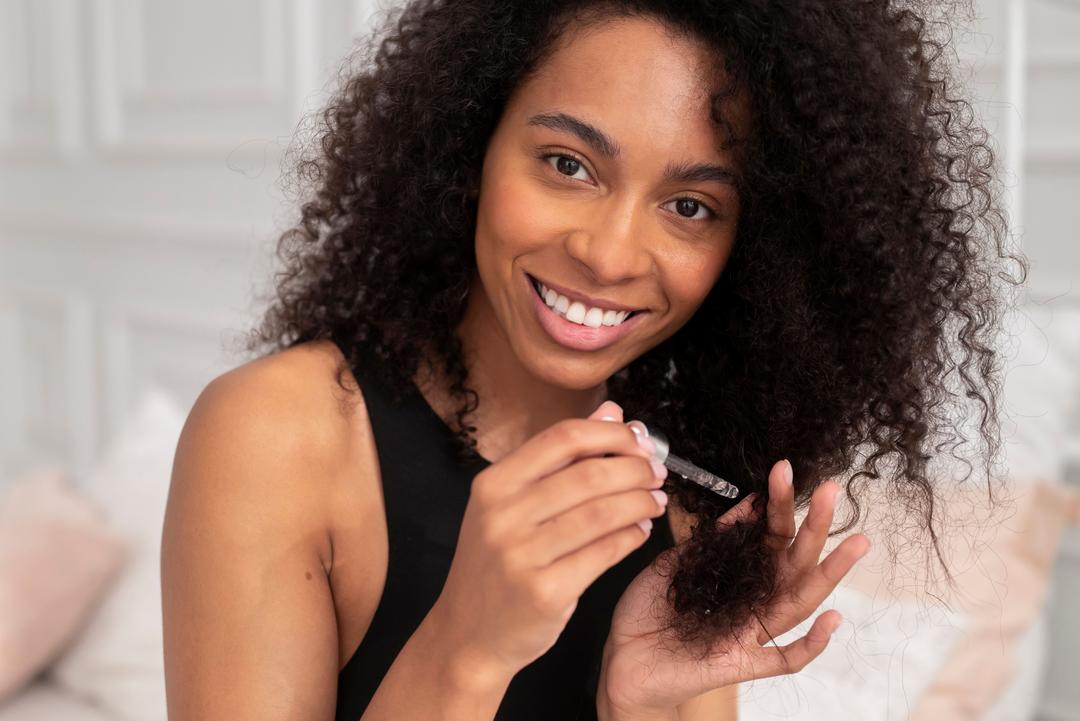
Your hair isn’t “normal”—so does biotin even apply to you?
If you have curly, wavy, relaxed, permed, bleached, or colored hair, you’ve probably wondered this.
Most biotin advice sounds generic:
“It strengthens hair.” “It reduces hair fall.”
But your hair:
- Breaks more easily
- Feels drier in UAE heat
- Reacts badly to hard/desalinated water
- Has been chemically altered
So the real question is:
Does biotin work differently for curly, chemically treated, or colored hair—or is it all marketing?
The honest answer:
- Biotin does not work differently at the follicle level
- But it feels more helpful for damaged hair types because of breakage reduction
Let’s break this down properly.
First: how curly and chemically treated hair is different (biologically)
![Image][image1]
![Image][image2]
Image
Curly & textured hair:
- Has a flattened or oval hair shaft
- Natural oils don’t travel easily from scalp to ends
- More prone to dryness and breakage
Chemically treated or colored hair:
- Cuticle layers are lifted or damaged
- Keratin bonds are altered or weakened
- Hair shaft becomes porous and fragile
Important: These differences affect the hair strand, not the hair follicle.
What biotin actually affects (and where)
Biotin (vitamin B7):
- Supports keratin formation inside the follicle
- Helps new hair grow with better structural integrity if biotin levels are low
Biotin does not:
- Repair damaged hair cuticles
- Reverse chemical damage
- Seal split ends
- Undo bleach or relaxers
Once hair is out of the scalp, it is biologically dead.
So—does biotin work differently for curly hair?
At the follicle level: No
At the appearance level: Often yes
![Image][image3]
![Image][image4]
![Image][image5]
Why curly-haired people feel biotin “works better”:
- Curly hair breaks more than straight hair
- Biotin strengthens new growth
- Less breakage = curls retain length
- Hair appears fuller and healthier
Biotin doesn’t change curl pattern—but it can help curls survive longer if breakage was driven by weakness.
Does biotin work differently on colored or bleached hair?
No—but the benefits are easily misunderstood
![Image][image6]
![Image][image7]
![Image][image8]
Biotin:
- ❌ Does not repair bleach damage
- ❌ Does not protect hair from dye chemicals
- ❌ Does not prevent color fading
What it can do:
- Improve the strength of new regrowth
- Reduce breakage at the root
- Make hair feel less fragile over time
If you’re bleaching or coloring regularly, biotin helps the new hair growing in, not the treated lengths.
Why biotin feels especially helpful in the UAE for damaged hair
![Image][image9]
![Image][image10]
![Image][image11]
In the UAE:
- Heat dehydrates hair shafts
- AC dries both scalp and ends
- Hard/desalinated water increases brittleness
- Frequent washing strips oils
For curly or chemically treated hair, this leads to breakage that looks like Hair Loss.
Biotin helps by:
- Improving hair strength from the root
- Making strands more resilient
- Reducing snapping—not regrowing hair
Can biotin reduce hair fall in curly or treated hair?
It reduces breakage, not shedding
Important distinction:
- Shedding = hair falling from the root
- Breakage = hair snapping along the shaft
Biotin helps with:
- Breakage-related “hair fall”
- Fragile strands
- Weak regrowth
Biotin does not stop:
- Stress-related shedding
- Hormonal hair loss
- Genetic thinning
Oral biotin vs biotin shampoos for damaged hair
![Image][image12]
![Image][image13]
![Image][image14]
Oral biotin:
- Supports new hair growth quality
- Helps if nutrition is inadequate
- Long-term, internal support
Biotin shampoos:
- Coat hair shafts
- Improve softness and manageability
- Reduce friction and breakage
- Cosmetic—not biological
For curly or colored hair, shampoos often feel more effective, but they don’t change follicle health.
Can biotin worsen dryness or scalp issues?
Biotin itself doesn’t dry hair—but:
- High doses may increase oiliness in acne-prone scalps
- Scalp issues from hard water, dandruff, or buildup won’t improve with biotin
If your scalp is unhealthy, hair quality suffers—regardless of supplements.
When biotin is actually useful for curly or treated hair
Biotin may help if:
- Hair breaks easily from the root
- Nails are brittle
- Diet is low in protein
- You’ve been under stress or illness
- Regrowth feels thin or weak
Biotin is less useful if:
- Hair damage is mid-length or ends only
- Hair loss is patterned or patchy
- Scalp issues are untreated
- Nutrition is already adequate
What helps more than biotin for curly & treated hair (UAE reality)
- Protein intake (hair is protein)
- Moisture-focused routines
- Gentle cleansing for hard water
- Reducing heat and chemical frequency
- Sleep & stress repair
- Scalp health first
Biotin supports growth quality—it doesn’t replace hair care.
So—does biotin work differently for curly, chemically treated, or colored hair?
Clear answer
- Biologically: No
- Visually & practically: Yes, because breakage reduces
Biotin helps damaged hair survive, not heal damage.
Think of it as:
Better bricks for future construction—not repairing cracks in an old wall.
What’s a smarter first step than relying on biotin alone?
Instead of assuming supplements will fix damage:
- Identify whether hair loss is breakage or shedding
- Address UAE-specific stressors (heat, water, AC)
- Support scalp and nutrition together
At Traya, this starts with a Hair Test—a way to understand whether your hair concerns are nutritional, stress-related, genetic, or purely damage-related before choosing supplements. No one-size-fits-all advice—just clarity first.
FAQs
1. Does biotin repair chemically damaged hair? No—it supports new growth, not damaged strands.
2. Is biotin better for curly hair than straight hair? It feels more helpful because curly hair breaks more easily.
3. Can biotin prevent color damage? No.
4. Does biotin help with frizz? Indirectly, by improving hair strength—not moisture.
5. Can biotin stop breakage? It can reduce breakage over time.
6. Should I take biotin if my hair is only dry at the ends? Probably not—hair care matters more.
7. Is biotin safe long term? At moderate doses, yes—but often unnecessary.