Your cart (0)
Female Pattern Baldness: Ludwig Stages Guide
Medically Reviewed by
Traya Expert
Published Date: March 12, 2026
Updated: March 12 at 8:02 AM

Noticing your hair part widening or your ponytail feeling thinner can feel unsettling. Female pattern baldness, also called female pattern Hair Loss, is a gradual thinning of hair mainly over the crown and middle scalp due to genetic and hormonal sensitivity. It progresses slowly but can be managed with early awareness and the right approach.
- Hair thins mainly at the centre and crown, not usually at the front hairline
- It is linked to genetics and hormone sensitivity
- Progression is gradual over years
- UAE heat, hard water and stress can worsen shedding
- Early diagnosis improves long-term management
What Is Female Pattern Baldness?
Female pattern baldness is a common type of long-term hair thinning seen in women. Unlike sudden hair fall after stress or illness, this condition slowly reduces hair density.
The medical term is female pattern hair loss. It belongs to the androgenetic alopecia family, meaning it has a genetic and hormonal basis. Hair follicles gradually shrink over time, producing thinner, shorter strands until growth slows significantly.
In most women, complete bald patches are rare. Instead, the scalp becomes more visible, especially under bright UAE sunlight.
How It Looks: The Ludwig Stages
Doctors often classify female pattern hair loss using the Ludwig scale. This helps understand progression and plan management.
Ludwig Stage I


Mild thinning at the crown Slight widening of the central part Hair volume reduces subtly
Ludwig Stage II


Noticeable scalp visibility Hair density significantly reduced Ponytail feels thinner
Ludwig Stage III
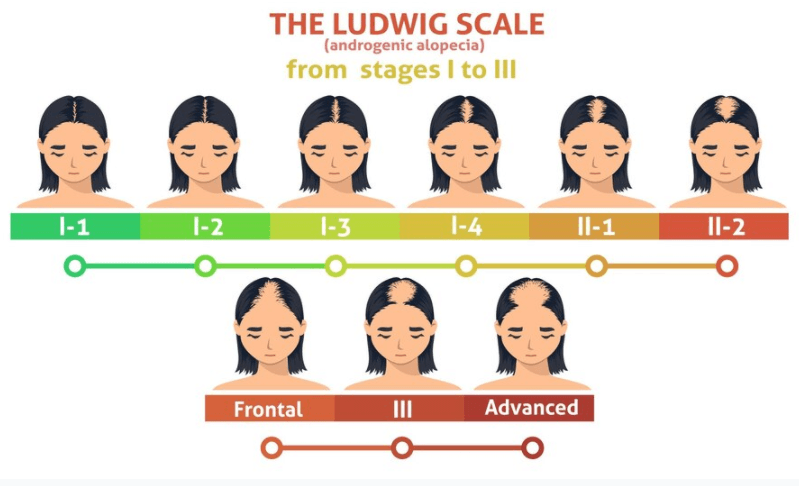
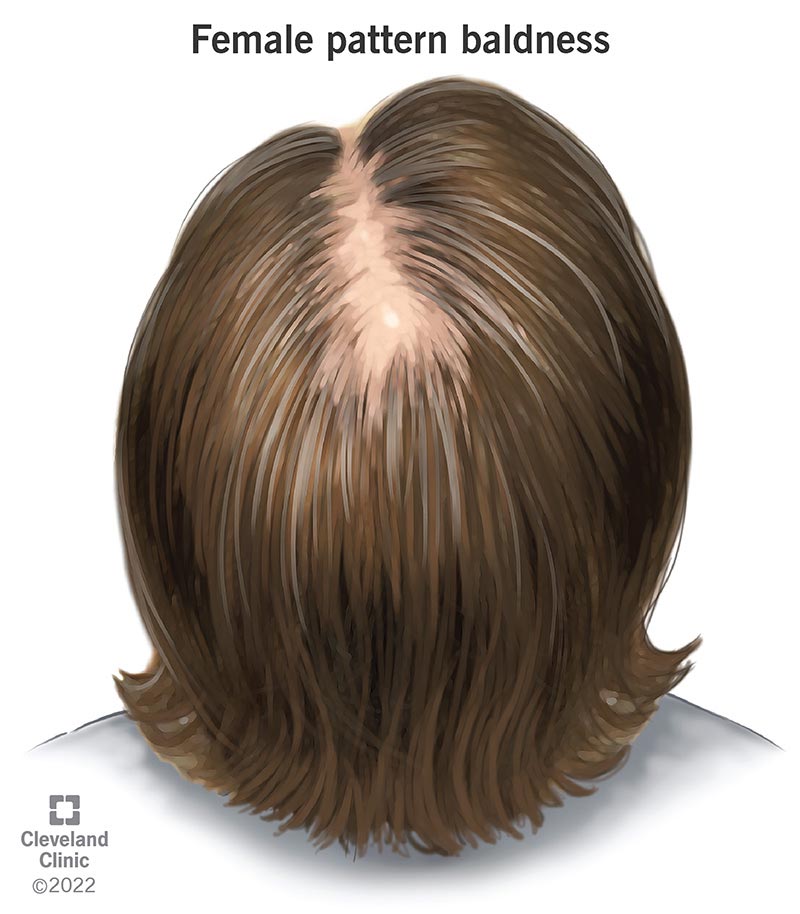
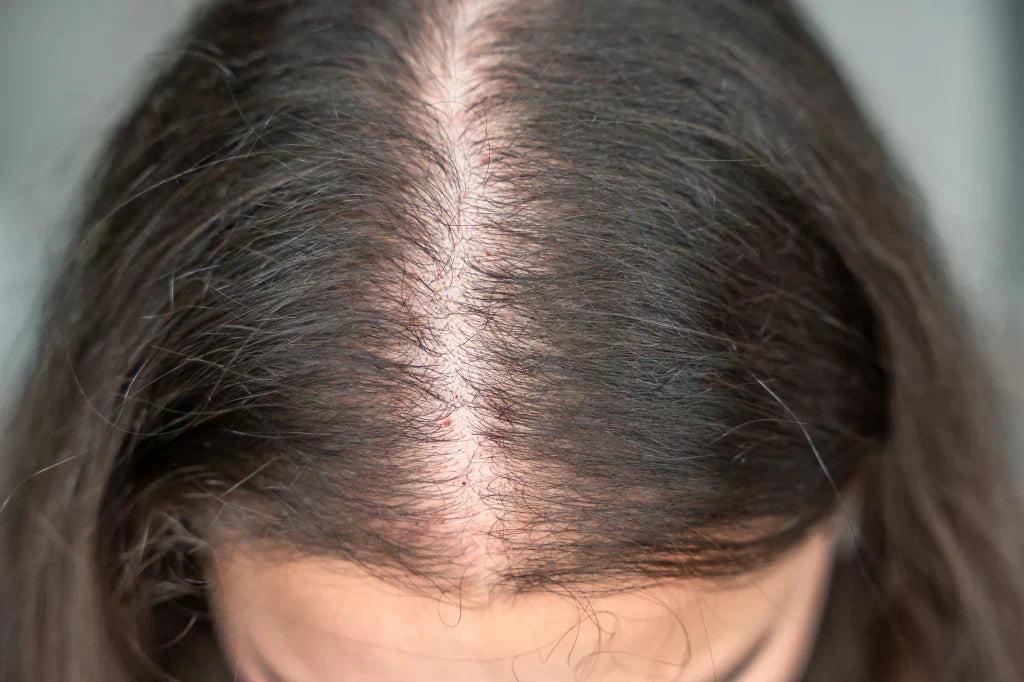
Severe thinning at the crown Scalp clearly visible Diffuse hair loss across the top
The frontal hairline is usually preserved, which differentiates it from male pattern baldness.
Female Pattern Hair Loss vs Other Hair Fall Types
Many women in the UAE confuse this condition with temporary hair fall. Understanding the difference prevents unnecessary panic.
| Feature | Female Pattern Hair Loss | Telogen Effluvium | Hair Breakage |
|---|---|---|---|
| Onset | Gradual | Sudden (after stress/illness) | Gradual |
| Pattern | Crown & mid scalp | Diffuse all over | Ends of hair |
| Scalp visibility | Yes | Rare | No |
| Reversible | Long-term management | Often temporary | Yes |
If shedding started suddenly after high fever, childbirth, crash dieting or severe stress, telogen effluvium is more likely.
Why Does Female Pattern Baldness Happen?
Hair growth follows a cycle: growth, rest, shedding. In female pattern hair loss, the growth phase shortens.
Key contributors include:
Genetic Sensitivity
If close female relatives experienced thinning, risk increases. The follicles become sensitive to androgens (male-type hormones present in small amounts in women).
Hormonal Changes
Hormonal shifts during:
- Perimenopause
- Menopause
- PCOS
- Thyroid imbalance
can accelerate thinning.
Nutritional Gaps
Iron deficiency, low vitamin B12, low protein intake, and vitamin D deficiency are common in Gulf dietary patterns, especially among women with restrictive diets.
UAE Environmental Factors
Living in the UAE adds additional stressors:
- Intense sun exposure increases scalp oxidative stress
- Hard or desalinated water may make hair brittle
- Constant air conditioning dries the scalp
- Shift work and sleep disruption affect hormonal balance
- High stress urban lifestyles elevate cortisol
These factors may not directly cause genetic hair loss but can accelerate visible thinning.
Symptoms to Watch Early
Early recognition improves long-term control.
You may notice:
- Widening centre part
- Increased scalp visibility under light
- Reduced hair volume
- Hair growing finer than before
- Slow regrowth after shedding
Pain, itching, or redness are not typical. If present, other scalp conditions may be involved.
How Is Female Pattern Hair Loss Diagnosed in the UAE?
Dermatologists usually assess through:
- Clinical scalp examination
- Family history review
- Hair pull test
- Blood tests (iron, thyroid, vitamin levels)
- Dermoscopy to examine follicle miniaturisation
In some cases, ultrasound or hormonal panels are suggested if PCOS symptoms are present.
Self-diagnosis often leads to incorrect supplement use, which does not address the real trigger.
Long-Term Management Options
There is no overnight fix. Management focuses on slowing progression and supporting healthy follicles.
Scalp Care
- Gentle cleansing to prevent buildup
- Avoiding excessive heat styling
- Protecting scalp from harsh UV exposure
Inflamed or clogged follicles reduce growth efficiency.
Nutrition Support
Hair is primarily protein. Insufficient intake affects growth.
Focus on:
- Adequate daily protein
- Iron-rich foods
- B12 sources
- Vitamin D monitoring
Supplementation decisions should follow medical evaluation.
Hormonal Balance
In perimenopausal women, hormonal shifts may require medical guidance. In PCOS cases, managing insulin resistance and weight stability helps reduce androgen impact.
Stress & Sleep Regulation
Chronic stress increases shedding signals. Sleep irregularity, common in shift-based jobs in the UAE, affects hormonal rhythm.
Improving sleep hygiene can indirectly support hair stability.
When to See a Doctor
Consult a dermatologist if:
- Hair thinning progresses rapidly
- You notice patchy bald spots
- There is scalp pain or redness
- Hair loss begins before age 20
- You have irregular periods or acne alongside thinning
Early professional assessment prevents advanced progression.
A Root-Cause Approach: Traya's Perspective
Hair fall rarely has a single trigger. In female pattern hair loss, genetics, hormones, nutrition, stress, and environmental exposure often overlap.
Traya follows a three-science approach:
Ayurveda focuses on internal balance, digestion, sleep quality, and stress patterns that influence hormonal stability.
Dermatology evaluates scalp health, follicle miniaturisation, and clinical patterns such as Ludwig stages.
Nutrition addresses iron, protein, vitamin B12, vitamin D, and other micronutrient gaps common in UAE lifestyles.
Instead of relying on one solution like oiling alone or supplements alone, this model analyses age, hair-loss stage, medical history, diet habits, and stress levels. Plans are personalised for UAE conditions including heat exposure, hard water, and urban stress.
The Traya Hair Test can help individuals understand potential root causes before deciding next steps. Results vary depending on consistency, stage of hair loss, and individual biology.
Frequently Asked Questions
Is female pattern baldness permanent?
It is a long-term condition linked to genetics and hormones. Early management can slow progression and improve hair density appearance, but untreated cases gradually worsen over years.
At what age does female pattern hair loss start?
It can begin in the 20s or 30s but becomes more common after 40, especially during perimenopause and menopause.
Does wearing hijab cause female pattern baldness?
Wearing hijab does not directly cause genetic hair loss. However, tight hairstyles and poor scalp ventilation in hot climates may contribute to traction stress if not managed properly.
Can iron deficiency cause female pattern hair loss?
Iron deficiency can worsen overall shedding. It does not directly cause genetic pattern baldness but may accelerate visible thinning.
Is female pattern baldness reversible?
Miniaturised follicles can sometimes improve with early intervention. Advanced stages are harder to reverse, which is why early diagnosis matters.
How fast does female pattern hair loss progress?
Progression is usually slow, occurring over several years. Rapid hair loss suggests another condition that needs evaluation.
Is hair transplant effective for women?
Hair transplant may be considered in selected advanced cases where donor density is adequate. A specialist evaluation is necessary to determine suitability.